
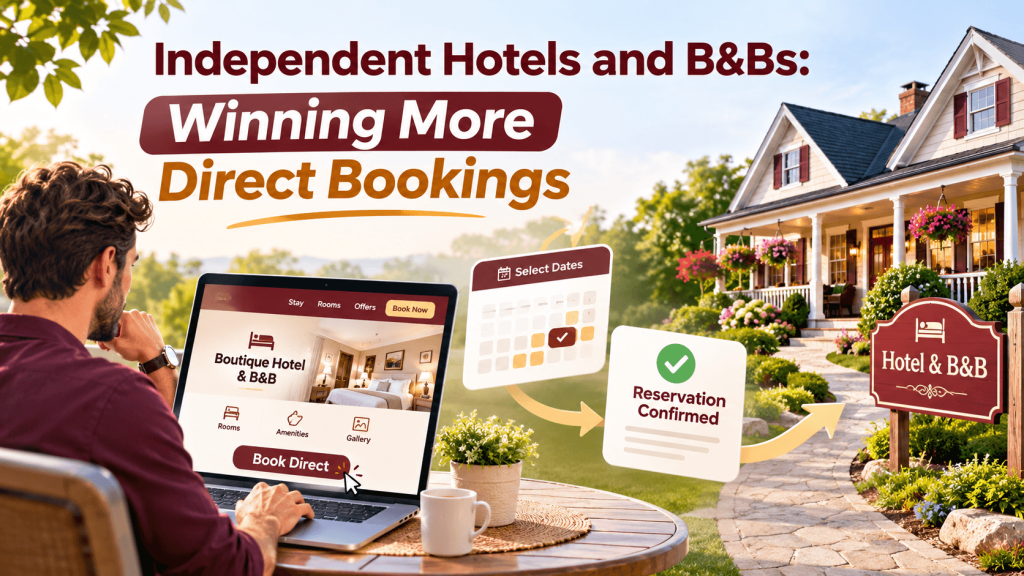
A charming bed-and-breakfast receives most of its reservations through large online travel agencies, paying a commission on each one. Guests often find the inn there first, then search its name to learn more. If the B&B’s own website is hard to use or its listings are outdated, those guests simply book through the agency.
Online travel agencies provide valuable exposure, but direct bookings help independent properties keep more of each reservation and build relationships with guests.
Make Your Website the Easiest Place to Book
Your website should load quickly on phones, show real photos of each room, list amenities clearly, and offer a simple booking engine with real-time availability. Display policies on cancellation, check-in, parking, and pets upfront. Many guests compare your site directly with travel agency listings, so clarity matters.
Consider offering a small, legitimate perk for booking direct, such as flexible check-in or a welcome treat, where your agreements with travel agencies allow it.
Make contacting the property easy, too. Many guests have questions before booking, such as whether a room fits a crib, how far the beach is, or whether early check-in is possible. A visible phone number, a quick email response, and clear answers on the website can turn a hesitant browser into a confirmed direct booking.
Keep Every Listing Consistent
Make sure your Google Business Profile, Apple Maps, and directory listings show the same name, address, phone number, and website. Google’s hotel listings can show prices from various booking sites; many booking engine providers can connect your own direct rates as well.
Travelers browsing broader directories can also find you. A property listed in the Hotels and Resorts category on Weebo should link directly to its own website, giving guests an easy path to book with the hotel itself.
Build Loyalty After the Stay
Ask satisfied guests for reviews, respond to every review thoughtfully, and invite guests to join an email list for seasonal updates. Returning guests who book directly are often your most profitable customers.
Track where bookings come from and how direct bookings change over time.
Conclusion
Independent hotels win direct bookings by making their own website the clearest, easiest place to reserve, and by keeping listings consistent everywhere. Directories such as Weebo, your Google profile, and travel agencies can all introduce guests to you; a strong website gives them a reason to book directly.
Frequently Asked Questions
Should independent hotels stop using online travel agencies?
Usually not. Travel agencies bring exposure to guests who might never find you otherwise. The goal is a healthy balance, using agencies for discovery while encouraging direct bookings through a strong website, good service, and guest relationships.
Can my own rates appear in Google’s hotel results?
Google’s hotel search can display rates from various booking partners. Many hotel booking engines and connectivity providers offer ways to include your direct rates. Ask your booking engine provider about available integrations and any associated costs.
What should a hotel website include to encourage direct bookings?
Fast mobile pages, real room photos, clear amenities and policies, a simple booking engine, and visible contact details. Guest reviews and local area information help, too. Make the booking button easy to find on every page.
Can I offer lower prices for direct bookings?
That depends on your agreements with online travel agencies, which sometimes include rate parity terms. Review your contracts carefully. Many hotels offer value-added perks instead of lower prices, which can encourage direct bookings without conflicting with agreements.